
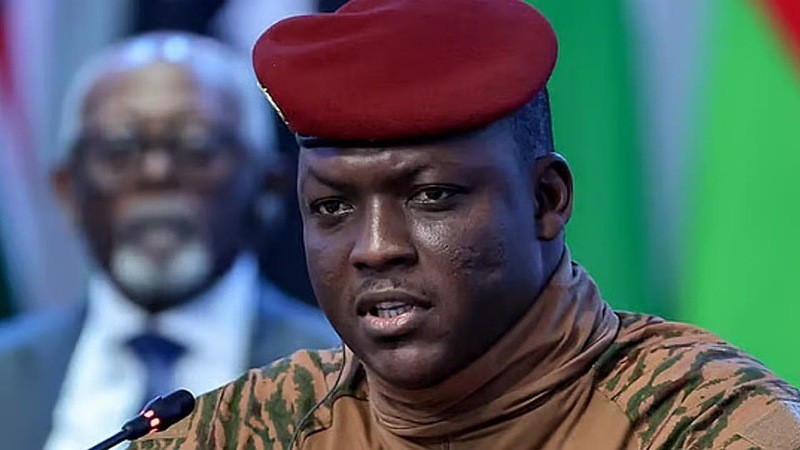
Burkina Faso’s President and military ruler, Ibrahim Traoré, has declared the start of a war against ‘radical Islam.’ He stated that the state would take stringent measures against those who promote extremism, and this fight has already begun.
In a speech delivered after the recent arrest of several influential imams and the passing of a controversial religious law, Traoré addressed Muslim religious leaders, saying, “If this is your Islam, we will fight against it. Extremists must change. If they do not change, the war has already begun.”
He also claimed that the new religious law has re-established Burkina Faso’s secular state character.
Traoré warned that imams who preach extremism in their sermons would be expelled from the country. However, he assured support for those who spread the message of peace and tolerance in Islam.
Traoré also accused foreign powers of using religion to destabilize Burkina Faso.
Meanwhile, tension has been brewing between the military junta government and the country’s Muslim community for the past few days. Traoré’s stern statement has sparked new discussions amidst this situation.
In May, the country’s security forces arrested renowned Sunni Imam Mohammed Ishak Kindo for criticizing the draft of the new religious law. Since then, Muslims have been protesting, demanding his release. Amidst the situation, Ouagadougou’s largest Sunni mosque was closed citing security reasons. There is currently no information available regarding Ishak Kindo’s whereabouts.
According to an AFP report, approximately 100 supporters of Ishak Kindo have been arrested and taken to army detention camps. Authorities stated that they would be given ‘civic training’ there.
Earlier, in mid-April this year, another imam named Mahmud Baro was arrested on similar charges.
On June 20, Burkina Faso’s interim parliament unanimously passed the new religious law. The law includes provisions for fines and imprisonment for child beggary, misuse of religion, and financial opaqueness of religious institutions.
The government claims the law was enacted with the aim of protecting secularism. However, critics allege that the law was introduced to further strengthen state control over religious institutions.
Source: The New Arab

