
Global financial markets experienced severe instability on Monday due to fears of prolonged military tension in the Middle East. As the shadow of war deepened, international oil prices surged rapidly, while stock markets suffered a significant setback. Reuters reported that investors, facing heightened uncertainty, are moving away from risky assets and gravitating towards safer havens like the dollar and gold.
The report stated that Brent crude prices rose by 4.5 percent in one day to $76.07 per barrel due to the conflict’s impact; at one point during trading, it even surpassed $82. Concurrently, US crude prices increased by 3.9 percent, reaching $69.59 per barrel. Gold prices also climbed by nearly 1 percent to $5,327 per ounce, driven by increased demand for safe investments.
Behind this market volatility are continuous military strikes by the US and Israel on Iran, and Iran’s retaliatory missile attacks. As the situation grows more complex, there are no signs of a swift de-escalation of the conflict. US President Donald Trump, in an interview with the Daily Mail, indicated that the conflict could last for another four weeks, and operations would continue until US objectives are met.
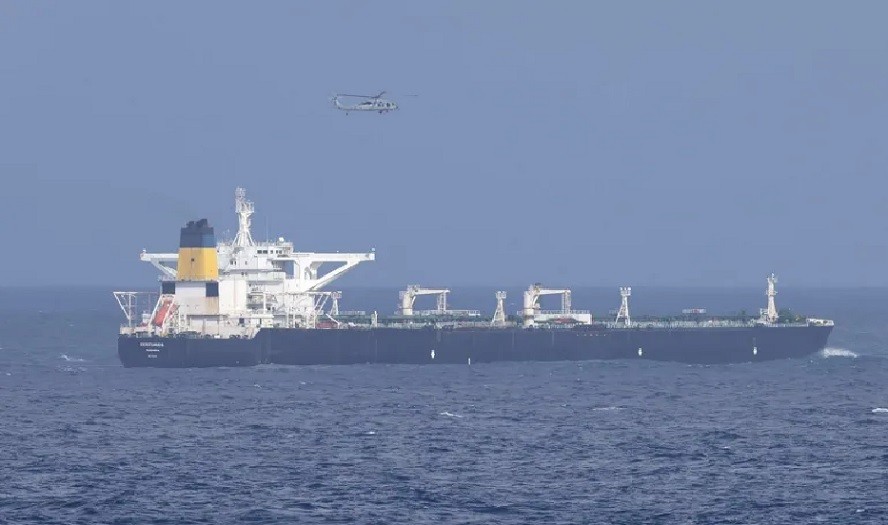
The global market’s attention is now focused on the Strait of Hormuz. Approximately one-fifth of the world’s seaborne oil and about 20 percent of liquefied natural gas (LNG) pass through this strait. Although the strait has not yet been officially closed, shipping has virtually come to a standstill due to security risks and insurance complexities. Consequently, numerous oil tankers are reportedly stranded at both ends.
According to Rystad Energy analyst Jorge Leon, approximately 15 million barrels of oil per day are unable to reach the international market in this situation. He warned that a significant upward revaluation of oil prices could occur if there are no immediate signs of de-escalation.
Meanwhile, OPEC+ has decided to increase oil production by 206,000 barrels per day for April. However, uncertainty remains regarding whether this oil can be safely exported from the Middle East. Many analysts are drawing comparisons between the current situation and the 1970s oil embargo, a crisis that saw oil prices surge by nearly 300 percent at one point.
The pressure from rising oil prices has also impacted global stock markets. Japan’s stock market indices have fallen significantly, with the airline sector being the most affected. In contrast, indices for major Chinese companies remained relatively stable.
Analysts fear that if oil prices remain high for an extended period, global inflation could rise again. This would impact consumer spending and business activities, ultimately slowing down global economic growth even further.

