
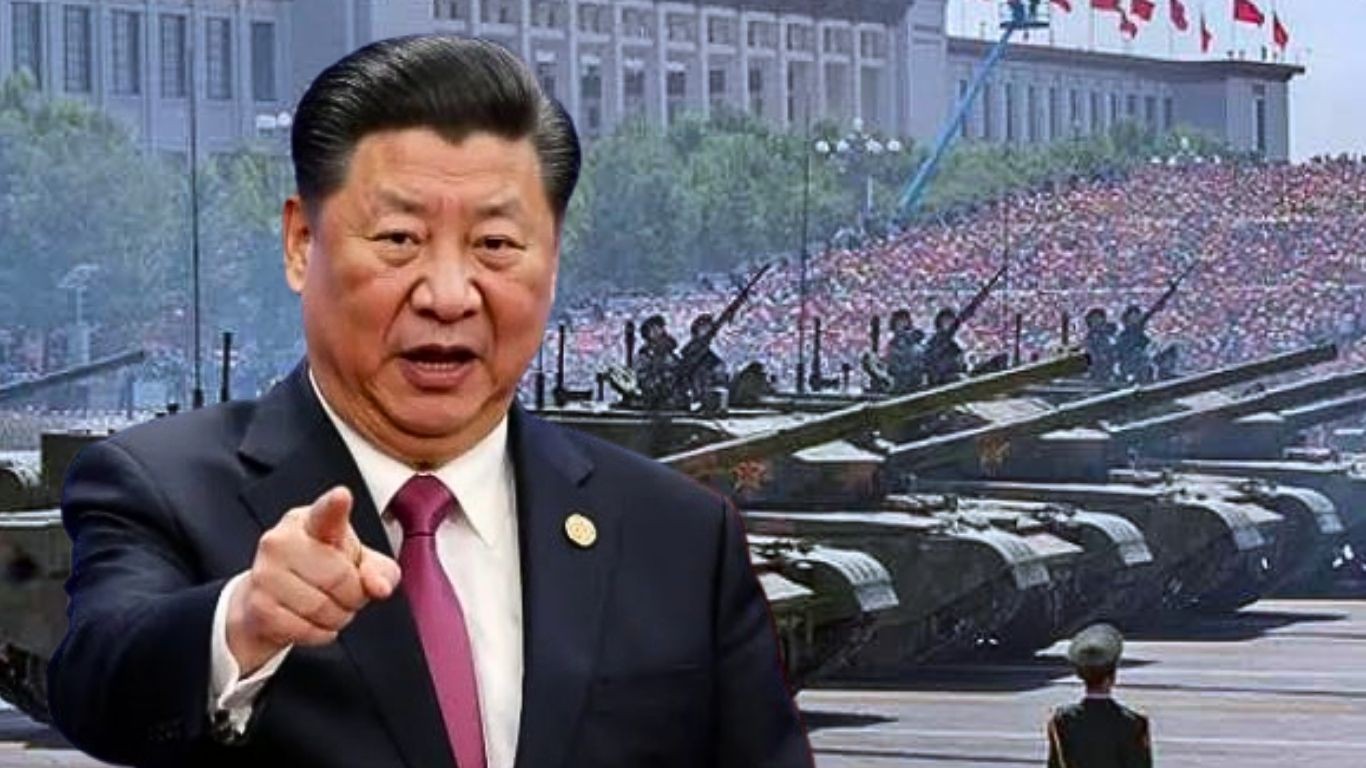
In the event of war or a major crisis, China will no longer rely solely on its military. If necessary, the government will be able to utilize the assets of ordinary citizens, private enterprises, and other national resources for defense purposes. The new law even allows for the confiscation of such assets under specific circumstances.
China’s parliament approved amendments to the Defense Law on August 28. The new provisions came into effect on October 1, as reported by the Indian media outlet ‘Sangbad Pratidin’.
The amended law states that in the event of a national security or defense requirement, the government can utilize citizens’ assets and, if necessary, confiscate them. Strict punitive measures are stipulated against anyone who obstructs this process or intentionally delays fulfilling their duties.
The report notes that this is the first time such significant changes have been made to China’s Defense Law since 2010. The amended law comprises 14 chapters and 82 articles.
The Chinese government claims that one of the primary objectives of this law is to swiftly activate defense mechanisms should any threat emerge against the country. Concurrently, plans have been made to enhance crisis response capabilities by integrating economic and social forces with national defense. The law also emphasizes safeguarding sovereignty, national unity, territorial integrity, and security, alongside the nation’s development interests.
The new provisions state that in the event of war or an emergency, various sectors – including transportation, postal services, telecommunications, cybersecurity, medical and pharmaceutical supply, food and grain supply, and engineering – must be prepared to fulfill defense-related responsibilities.
To this end, units in relevant areas must form special teams and arrange necessary training to enable rapid action during a crisis. Special emphasis has been placed on cybersecurity. Furthermore, the law stresses enhancing China’s defense capabilities through the use of new and advanced technologies.
Another significant aspect of the amended law is that some of China’s defense-related provisions may also apply to individuals residing outside the country. This means certain actions taken by individuals or organizations abroad could fall under Chinese law.
Discussions surrounding this new law have also begun in the international community. Many analysts believe that the law’s changes are not merely administrative reforms; rather, they indicate China’s broader preparation for potential war or major national crises.
Theresa Fallon, director of the Brussels-based ‘Centre for Russia Europe Asia Studies,’ has also expressed concern over the matter. In her view, the global risk of war and conflict is increasing, making it difficult to ignore. She believes that Chinese President Xi Jinping is preparing in advance for potential crises, drawing lessons from the Russia-Ukraine war and the recent conflicts involving Iran, Israel, and the United States.
Overall, China’s amended Defense Law has created a framework that extends the country’s military preparedness beyond just the armed forces to encompass the economy, technology, the private sector, and the assets of ordinary citizens. Consequently, this is seen as a significant shift in China’s long-term defense strategy.

