
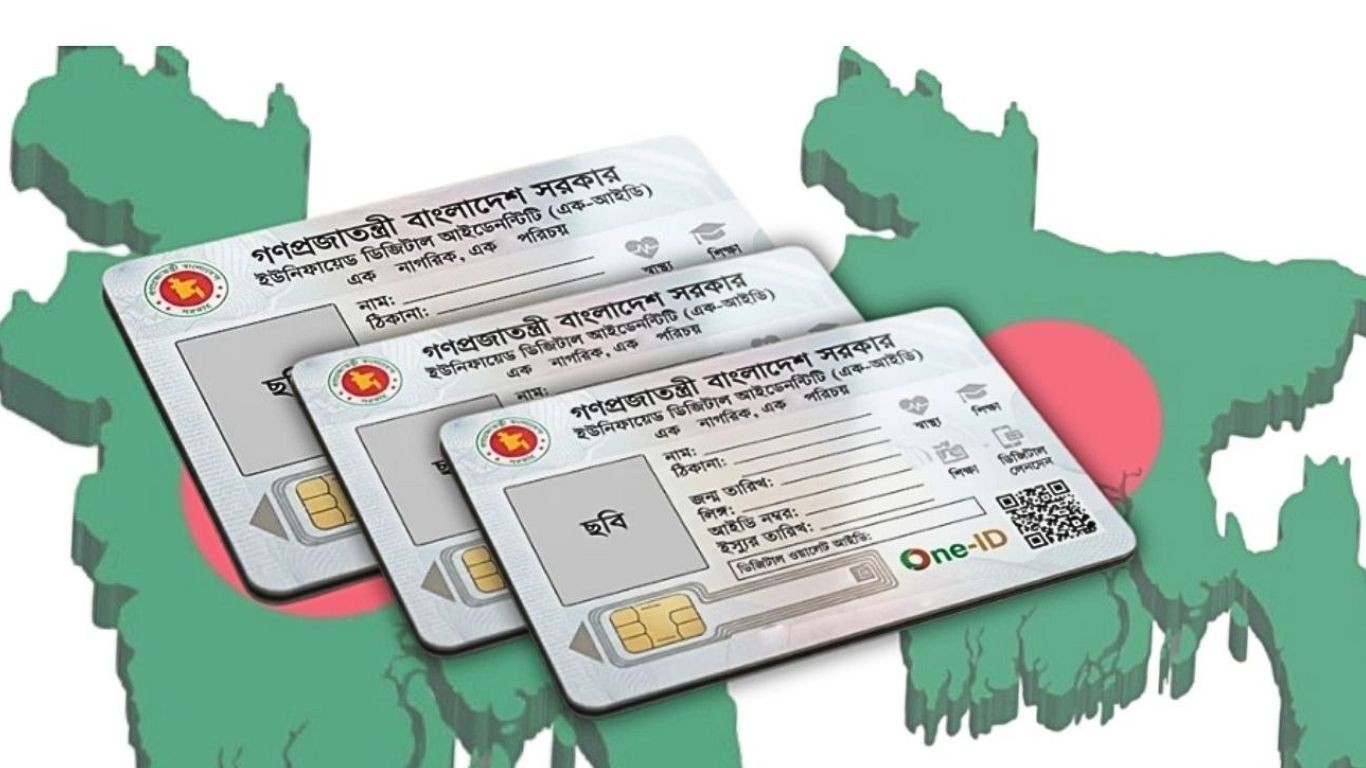
The government has undertaken an initiative to provide a single identification card to all citizens immediately after birth. This identification card, named ‘Unified Digital Identity’ or ‘Ek-ID’, is planned to be used as a lifelong permanent and unique identity for citizens. There is also an initiative to use this identity card for availing health, education, and various government services.
To this end, the Information and Communication Technology Division has undertaken a project named ‘Digital Service Transformation for Access and Resilience’ or ‘D-STAR’. The Bangladesh Computer Council will implement this project. The implementation period for the project has been set from 2026 to 2031. The project proposal has been sent to the Planning Commission for approval.
Mamunur Rashid Bhuiyan, Secretary of the Information and Technology Division, confirmed the matter on Thursday (September 3).
Currently, children in the country are issued birth registration certificates after birth. Subsequently, at 18 years of age, a National Identity Card (NID) is issued. However, the proposed ‘Ek-ID’ system will have no age limit. The plan is to provide this single identity to a citizen immediately after birth.
Once the new system is introduced, citizens will not need to provide the same information repeatedly to various government departments. Concerned officials state that there are plans to gradually integrate the functionalities of existing various identification cards and documents with Ek-ID.
Services currently provided through National Identity Cards, Family Cards, and Farmer Cards are also planned to be offered through Ek-ID in the future. However, a final decision on this matter has not yet been made.
‘One Citizen, One Digital Identity, One Wallet’
The experiences of the United States, Singapore, Estonia, and India are being considered in the creation of the single identification card. Information and Technology Advisor Rehan Asif Asad has presented the concept of the new system as ‘One Citizen, One Digital Identity, One Wallet’.
This means that a citizen will have one identification card, which will also serve as their digital identity. There are also plans to provide digital transaction facilities through this in the future. However, the exact type of information that will be included in the new identity card has not yet been finalized.
Plan to Produce 200 Million Cards
According to the project’s preliminary proposal, there are plans to create identity cards for approximately 180 million citizens of the country based on the latest census data from the Bangladesh Bureau of Statistics. However, 200 million cards will be produced and printed.
The cost for producing and printing each polycarbonate chip card has been estimated at 2 US dollars, which is approximately BDT 246 at the current exchange rate. Additionally, the cost for distributing and supplying each card has been estimated at 1 US dollar or approximately BDT 123. Consequently, the total cost per card, including production, printing, distribution, and supply, will be approximately BDT 369.
Project Cost BDT 9,193 Crore
The total estimated cost for the ‘D-STAR’ project is BDT 9,193 crore. Of this, the government’s own funding will be BDT 7,663 crore. The remaining BDT 1,530 crore has been proposed to be sourced from a World Bank loan.
The largest expenditure of the project has been allocated for card production, printing, biometric data collection, and distribution. A total expenditure of BDT 7,380 crore has been proposed for this sector.
Citizen Hassle May Decrease
Currently, various types of identification cards and numbers are in use in the country, including National Identity Cards, birth registration, passports, driving licenses, and tax identification numbers.
According to experts, if effective interoperability can be established among these databases, citizens will need to provide the same information less frequently. This could reduce citizen hassle in availing government services and make the service delivery process simpler, faster, and more efficient.

