
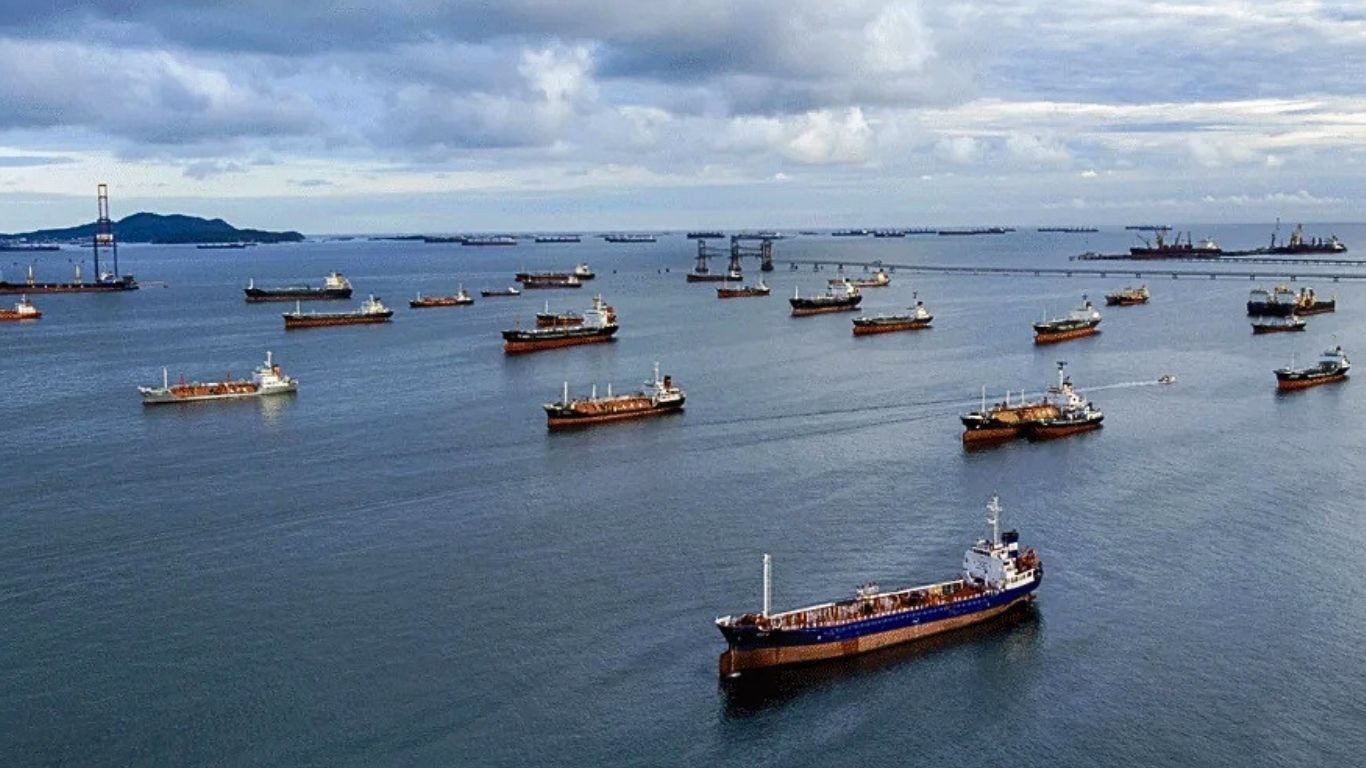
Amidst ongoing conflict in the Middle East, Iran has exempted commercial ships from four countries from restrictions on ship movement through the strategically important Strait of Hormuz. The countries are India, China, Iraq, and Qatar. However, this exemption does not mean free passage. An Iranian lawmaker stated that ships from India and China are still required to pay the stipulated fees for passage.
India’s NDTV reported this information on Wednesday (November 4). Earlier, on Tuesday (November 3), Amir Hayat Mogaddam, Deputy Head of the Iranian Parliament’s National Security and Foreign Policy Committee, highlighted the matter in an interview with Iran’s semi-official news agency ISNA.
Mogaddam stated that India, China, Iraq, and Qatar have been exempted from restrictions on movement through the Strait of Hormuz. Ships from these countries are able to move freely, and the United States is also not obstructing them.
He added that the decision was taken considering the mutual interests of Iran and the four countries. According to him, one of the main objectives of facilitating Indian ship movement is to ensure the import of medicines from India. On the other hand, by exempting Chinese ships, Tehran aims to retain political support from Beijing.
Analysts believe Iran’s decision involves economic and diplomatic calculations. India is a crucial supplier of medicines for Iran. Therefore, Tehran wants to keep the path open for essential medicine imports by reducing obstacles to Indian ship movements.
Meanwhile, China and Iran have long-standing economic and strategic ties. China is one of the largest buyers of Iranian oil. Its political and diplomatic support is also important to Iran. Consequently, Tehran is giving special importance to maintaining normal movement for Chinese ships.
In Qatar’s case, there’s a different calculation. The country is one of the world’s leading exporters of liquefied natural gas (LNG). The Strait of Hormuz is vital for energy transportation in the Persian Gulf. According to the Iranian lawmaker, Qatari ships are being granted duty-free passage.
However, Indian and Chinese ships are required to pay passage fees. The lawmaker did not clarify whether any tariffs are being levied on Iraqi ships.
Iran’s decision should not be viewed as a step towards allowing full ship movement in the Strait of Hormuz. Rather, it is being considered a selective exemption for specific four countries. With restrictions remaining on ships from other countries, uncertainty in international maritime trade has not yet diminished.
A significant portion of the world’s seaborne oil and fuel passes through the Strait of Hormuz. Therefore, limited movement through this waterway impacts oil and gas supply, transportation costs, and international energy prices.
This exemption is particularly important for import-dependent India. A large part of the country’s crude oil, LPG, and LNG imports relies on this maritime route. Similarly, for China and Qatar, the smooth operation of the Strait of Hormuz is economically crucial.
Overall, by granting exemptions to a select few countries for ship movement through the Strait of Hormuz, Iran is attempting to safeguard its economic and diplomatic interests. At the same time, Tehran aims to maintain its control and influence over this vital waterway.

