
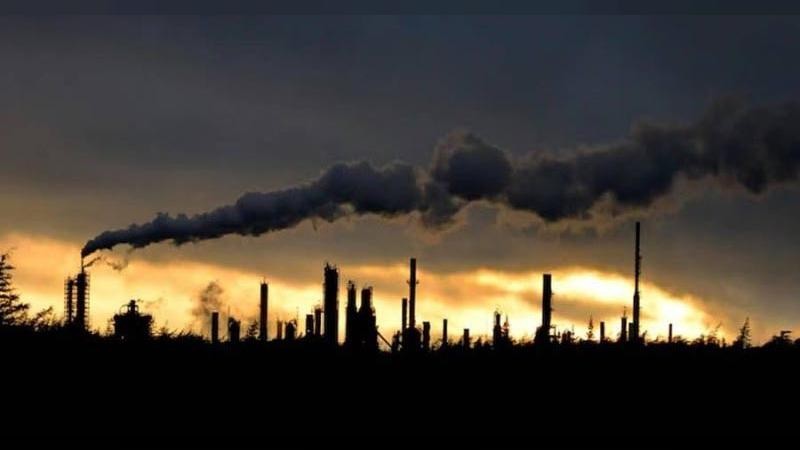
Masudur Rahman: The first two months of 2026 have confronted the world with a harsh reality. From January’s bone-chilling cold wave to February’s unprecedented heatwave—this erratic behavior of nature is no longer just ‘weather change,’ but has emerged as a climate emergency. The beginning of 2026 reminds us that nature has exceeded its limits of tolerance.
In January 2026, the polar vortex that struck Europe and North America broke records from the past decade. Life came to a standstill, especially in Scandinavian countries, as temperatures plummeted below minus 40 degrees Celsius. Scientists state that due to the abnormal behavior of the jet stream, frigid Arctic air is directly entering populated areas. This is a reverse reaction to global warming.
While it is summer in the Southern Hemisphere, the situation in Latin America is starkly different. In February 2026, a record number of wildfires were observed in the Amazon basin. Prolonged drought has led to critically low river water levels, threatening the ecosystem. According to the Brazilian meteorological department, this year’s lack of humidity is the highest in 50 years. This is not merely a regional issue; the destruction of this forest, known as the ‘lungs of the world,’ means global carbon emissions becoming uncontrollable.
Since the beginning of 2026, air pollution has turned into a permanent crisis in South Asian countries, particularly Dhaka, Delhi, and Bangkok. The combination of January’s fog and polluted smog has effectively filled the lungs of ordinary people with toxic fumes. The Air Quality Index (AQI) consistently hovers between 300-400. Increasing urbanization and the uncontrolled use of fossil fuels are further accelerating this environmental disaster.
Currently, the impact of rising sea levels is acutely evident in coastal areas of Pacific island nations and deltaic regions like Bangladesh. Due to the king tides of 2026, salinity in coastal agricultural lands has increased to such an extent that rice cultivation is becoming impossible. Scientists warn that if this trend from 2026 continues, several tens of millions of people will become ‘climate refugees’ by 2030.
Data from these two months of 2026 indicate that maintaining the Paris Agreement’s target of 1.5 degrees Celsius is now an almost impossible dream. In the intricate web of global politics, environmental protection seems to have become a secondary concern. However, it must be remembered that nature recognizes no national boundaries. If we do not immediately shift away from fossil fuels, increase investment in renewable energy, and bring carbon emissions down to zero, then 2026 will mark a turning point in history from which there will be no return.
Masudur Rahman
Writer and Journalist
(Opinions published in the Open Column section are solely the author’s own. The views expressed may not necessarily align with the editorial policy of BD24Live.com.)

