
International fashion brands are withdrawing garment orders from Bangladesh due to political instability, labor unrest, and disruptions in production. Global brands such as Zara, H&M, Marks & Spencer (M&S), and Celio are shifting a significant portion of their orders to India and other Asian countries. This development has created new concerns in Bangladesh’s ready-made garment (RMG) industry.
According to a Reuters report, approximately $254 million worth of garment orders were withdrawn from Bangladesh in the first 18 days of November. A large portion of these orders has gone to neighboring India. The news agency reported this information citing three factory owners.
According to data provided by factory owners, international brands diverted about 10 percent of their monthly orders from Bangladesh to other Asian production hubs in the first half of November. This decision was driven by disruptions in production due to labor unrest and increased production costs.
Industry insiders say that rising worker wages, fuel shortages, and political uncertainty have undermined Bangladesh’s advantage of low production costs. Consequently, international buyers are increasingly turning to India, Vietnam, Cambodia, and Indonesia as alternative manufacturing centers.
According to the Bangladesh Garment Manufacturers and Exporters Association (BGMEA), labor protests have caused over $400 million in production losses in the garment industry. This industry accounts for more than 80 percent of the country’s total export earnings and employs approximately 40 percent of the manufacturing sector’s workforce.
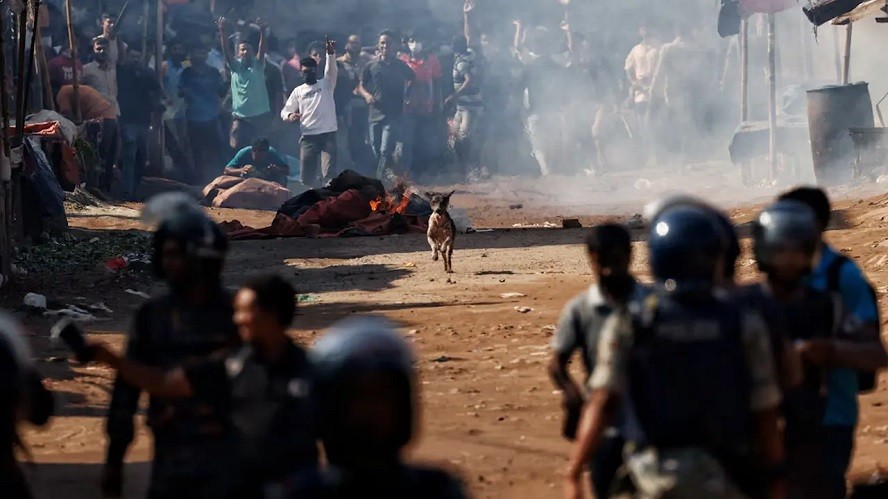
Last Wednesday, the minimum wage for ready-made garment workers in Bangladesh was increased by 36 percent. However, the report noted that this was the smallest wage hike in four decades. Workers had demanded more than double the increase. Protests and clashes with police continued even after the new wage announcement.
Abdus Rahman Tarafdar, Secretary of the Ministry of Labor and Employment, expressed satisfaction with the wage hike decision and hoped that all garment workers would return to work from Saturday.
Citing factory owners, Reuters reported that various international brands, including Zara, H&M, Marks & Spencer, and Celio, have shifted their orders to other countries due to labor unrest. A significant portion of these orders has been received by India.
M. Mohiuddin Chowdhury, a director at BGMEA, stated that increases in worker wages, electricity, gas, and raw material prices are creating additional pressure on garment manufacturers. He noted that production costs have further risen due to wage increases at a time when buyers are demanding lower prices for products.
Mahmud Hasan Khan, president of BGMEA, without naming specific brands, mentioned that temporarily shifting some orders to other countries helps maintain relationships with international buyers and minimizes financial losses.
However, the major concern among industry stakeholders is that Bangladesh might not only lose temporarily shifted orders but also future orders. This is because international buyers are now re-evaluating their production and supply locations.
Meanwhile, the increasing fuel supply deficit, exacerbated by the Middle East crisis, is disrupting production in Bangladeshi factories. Some factories are being forced to rely on expensive alternative fuels.
BGMEA director Mohiuddin Chowdhury stated that international buyers now prioritize timely delivery over product price. He noted that it takes approximately one week longer to deliver goods from Bangladesh compared to India. Vietnam and Cambodia, on the other hand, can reduce delivery times by up to 15 days.
According to his information, competitor countries can usually produce and deliver goods within 60 to 90 days, whereas in Bangladesh, this process takes approximately 120 days.
Factories around Dhaka have already incurred 20 to 25 days of production loss. To deliver orders on time, some factories are considering working overtime and using expensive air freight for shipments.
Khan Monirul Alam, Managing Director of Alps Apparels Group, a supplier to European brands, said that new orders have also decreased due to the instability. He noted that most of his buyers have stopped placing new orders since November 1, with buyers reporting order shifts, postponements, or cancellations.
The report also mentions that political tensions surrounding former Prime Minister Sheikh Hasina’s potential return to Dhaka from India have further exacerbated the uncertainty.
Industry stakeholders emphasize that ensuring political stability and uninterrupted production is crucial for maintaining international buyers’ confidence. BGMEA director Mohiuddin Chowdhury fears that orders shifted to other countries during periods of instability may not return to Bangladesh even after the situation normalizes.

