
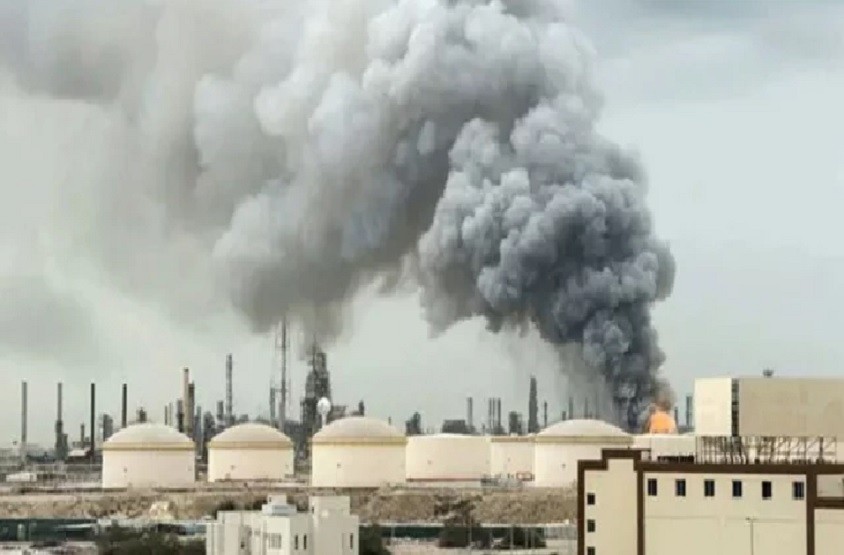
Following Iran’s missile attack that damaged Qatar’s main gas processing center, South Asian countries like Bangladesh, Pakistan, and India are expected to face imminent electricity shortages and a reduction in industrial production.
According to reports, extensive damage has occurred at Qatar’s Ras Laffan Industrial City, where almost all of the country’s natural gas is processed, liquefied (LNG), and exported.
Data from energy analysis firms indicate that Pakistan imports approximately 99 percent and Bangladesh nearly 70 percent of their LNG from Qatar. India, on the other hand, sources over 40 percent of its total LNG from Qatar.
About three weeks into the ongoing Iran conflict, not only has the crucial oil and gas route, the Strait of Hormuz, become virtually non-operational, but one of the world’s most vital LNG facilities has also been damaged.
QatarEnergy, Qatar’s state-owned energy company, has already temporarily halted LNG production from the Ras Laffan facility. However, there are concerns that due to the damage from the recent attacks, it may take a long time for production to return to normal.
According to experts, Bangladesh and Pakistan have very limited LNG reserves—only about one to two weeks’ worth. Consequently, a supply disruption could quickly lead to electricity deficits and a reduction in gas supply to the industrial sector.
Meanwhile, Taiwan, an East Asian country also significantly reliant on Qatari gas, has stated that it has secured sufficient supplies for March and April.
Analysts suggest that countries like China, Japan, and South Korea are comparatively less at risk due to their large reserves and alternative supply systems.
Overall, this attack on Qatar’s gas facility could create significant instability in the global energy market, directly impacting South Asia’s energy security.
Source: CNN.

