
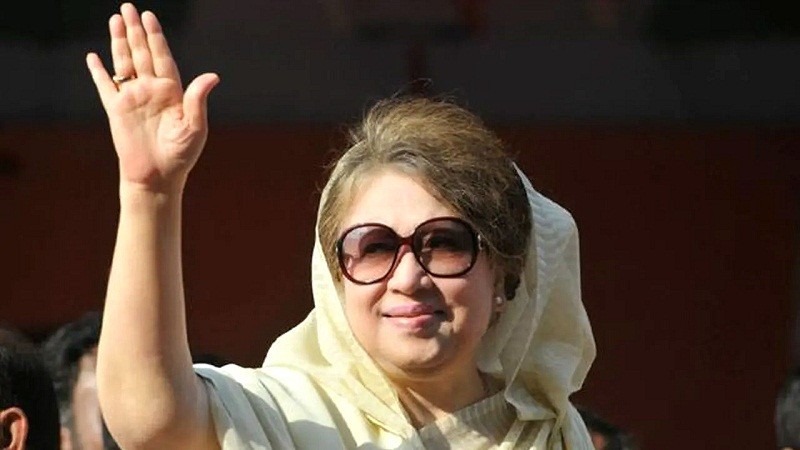
As the news broke in the early hours of the morning, the country seemed to stand still. Roads fell silent, politics paused, and countless hearts shattered at once. The passing of the uncompromising leader, former Prime Minister and BNP Chairperson Begum Khaleda Zia, has plunged the nation into deep mourning.
She was a woman who stood firm through the harshest storms of politics. Repeated imprisonments, prolonged illness, and relentless pressure never broke her spirit. Even in her final days, she remained a symbol of courage and resistance. With her departure, Bangladesh has lost not just a political leader, but a chapter of its history.
When her body was taken out of Evercare Hospital, the scene was heavy with unspoken grief. There were no loud slogans, no chaos—only silent tears and folded hands. As the procession moved forward, people lined both sides of the roads, raising their hands in farewell to the woman they regarded as the voice of their struggle.
Her long-time residence, ‘Feroza’ in Gulshan, once a hub of political decisions and resistance, turned into a house of mourning. Flowers filled the courtyard, and the air was thick with sorrow. Many whispered through tears,
“She was not just our leader — she was our strength.”
At the National Parliament’s South Plaza and along Manik Mia Avenue, an ocean of people gathered to offer their final prayers. These grounds have witnessed countless historic moments, but the silence that day carried a different weight. Political differences faded as people from all walks of life came together for one purpose — to say goodbye.
An elderly woman standing among the crowd softly said,
“She fought her entire life for us. Today, all we can do is pray.”
Begum Khaleda Zia’s life was marked by struggle. Even while holding the highest office, she faced political hostility, long periods of imprisonment, declining health, and isolation. Yet she never compromised, never bowed her head. Her resilience transformed her into more than a politician — she became a symbol of unwavering determination.
Following her burial beside her husband, the late President Ziaur Rahman, one chapter came to an end. But her story does not end here. Some people transcend death — they live on in memory, in history, and in the spirit of resistance they leave behind.
Today, the nation weeps. It weeps with love, with respect, and with gratitude for a woman who never surrendered her beliefs. The warrior is gone, but her legacy will endure.

