
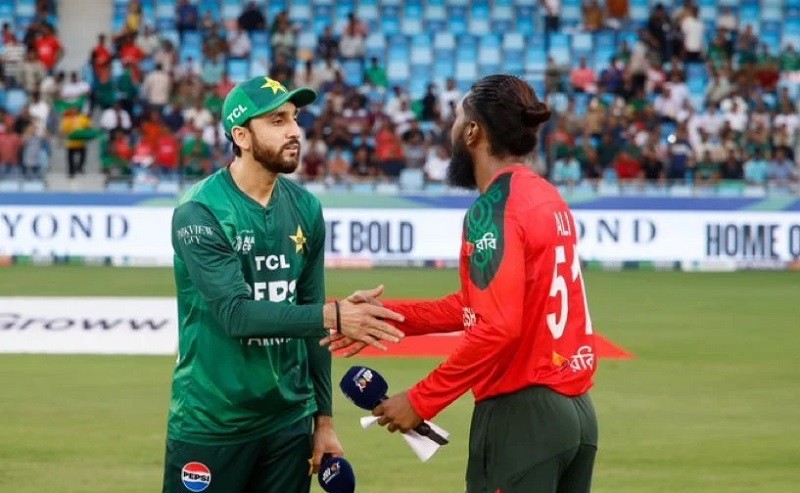
Pakistan will not play against India in the upcoming T20 World Cup. The Pakistan government has decided to boycott the match against its arch-rivals in support of Bangladesh. This was confirmed in a message posted on the official X handle of the Pakistan government on Sunday night. However, Pakistan will participate in the World Cup despite not playing against India.
In the message, the Pakistan government wrote, ‘The Government of the Islamic Republic of Pakistan has approved the Pakistan Cricket Team’s participation in the 2026 ICC T20 World Cup. However, the Pakistan Cricket Team will not participate in the scheduled match against India on February 15.’
Earlier, Pakistan Cricket Board (PCB) Chairman Mohsin Naqvi held discussions with Pakistan’s Prime Minister Shehbaz Sharif regarding the match boycott. The decision to boycott the match was made there.
This marks the first time a team has officially announced a boycott of a World Cup match in support of a third country. This boycott against India may result in a significant financial penalty for Pakistan. However, despite this risk, Pakistan has clarified its stance against India’s dominance in world cricket. Boycotting this match means Pakistan will not only face financial penalties from the ICC but also lose a substantial amount of revenue earned from the match. Despite all these potential penalties and criticisms, Pakistan’s decision to boycott the India match clearly demonstrates the PCB’s determination to break India’s unchallenged hegemony in the ICC and global cricket.
When Bangladesh decided not to participate in the World Cup, PCB Chairman Mohsin Naqvi had already expressed support for their decision. He had prepared four plans in support of Bangladesh before meeting with Prime Minister Shehbaz Sharif. During those discussions, the board considered alternatives to participate in the tournament while still conveying a message of protest. The main focus of the discussion was how to express solidarity without withdrawing from the tournament. PCB Chairman Mohsin Naqvi also consulted with board officials and former cricketers. Sources indicate that Naqvi took a clear stance in favor of Bangladesh, stating that the Bangladeshi team had faced ‘humiliating circumstances’ and should not be left alone in this situation.
Previously, Kolkata Knight Riders dropped Mustafizur Rahman from the IPL at the behest of the Indian Cricket Board due to security concerns. Following this incident, the Bangladesh Cricket Board (BCB), worried about the entire team’s safety, demanded that its matches be moved outside India. Bangladesh specifically requested to move its matches from India to Sri Lanka. This led to over three weeks of discussions and correspondence with the ICC. However, the world’s highest cricket governing body could not break free from Indian dominance. Influenced by India, they ultimately stuck to their original decision. Even an ultimatum failed to sway the BCB. Consequently, the ICC’s final decision was to replace Bangladesh with Scotland.
The ICC’s decision drew a storm of criticism worldwide. This is because, for the same security reasons, India had refused to play in Pakistan during the last Champions Trophy. Not only that, India played all its matches at the same venue, staying in the same hotel in Dubai, and ultimately lifted the trophy. So why a different rule for Bangladesh? In search of an answer to this question, PCB Chairman Mohsin Naqvi called the ICC ‘two-faced.’ Additionally, senior Indian sports journalist and author Sharda Ugra lambasted her own country’s cricket board and the global cricket governing body, accusing them of double standards. Amidst this widespread criticism, Pakistan’s decision to boycott the India match delivered a significant blow to the ICC.

