
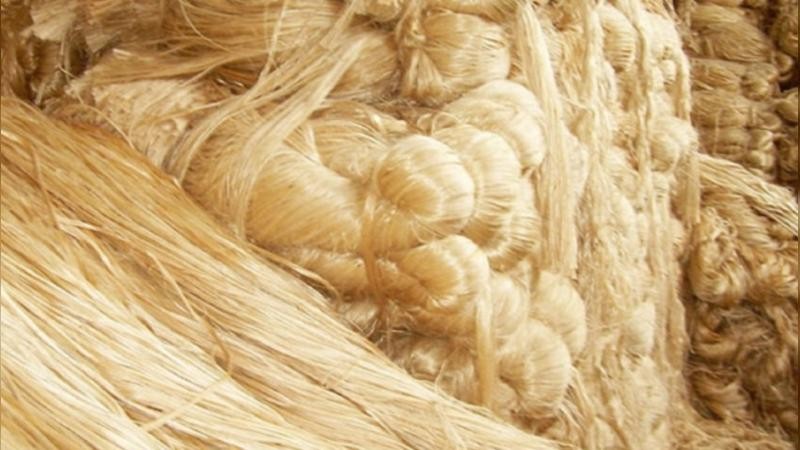
Despite receiving good prices at the beginning of the season, jute farmers in Rajshahi are now in distress due to a sudden drop in market prices. At the Nowhata jute market in Paba upazila, the price of jute has decreased by approximately Taka 800 to Taka 1,000 per maund within a two-week period. Consequently, farmers are concerned about covering their production costs and achieving their desired profits.
On early Monday and Thursday mornings, farmers from various surrounding areas flocked to the Nowhata market with their jute. Freshly cut and processed jute was brought in by vans, Nosimons, and Bhatbhatis. However, many farmers are returning home without selling their jute as they are not receiving the expected prices in the market.
According to market insiders, just a couple of weeks ago, jute was selling for Taka 4,000 to Taka 4,500 per maund, depending on its quality. Currently, the price for the same quality jute has dropped to approximately Taka 3,200 to Taka 3,500. As a result, farmers’ income per maund of jute has significantly decreased in a short span of time.
Saiful Islam, a farmer from Padma Char area in Paba Upazila, brought 65 maunds of jute to the market this time. Earlier, he had sold jute of the same quality for Taka 4,000 per maund. Expressing frustration over the current market price, he said, “The price being offered now is much lower than what I sold jute for just a few days ago. Cultivation costs have increased, and if jute prices continue to fall like this, farmers won’t make any profit.”
Babu, a farmer from Darusha area, faces a similar situation. He came to Nowhata market with approximately 149 kg of jute and was offered Taka 3,400 per maund by traders. Not getting his desired price, he took his jute back home without selling it. He stated that he had sold jute for Taka 4,000 per maund previously and had hoped for a similar price this time. However, fearing losses due to the low prices offered by traders, he did not sell. He has more jute at home and will bring it to the market if prices increase slightly.
Salman Ali, a farmer from Keshrahat area in Mohanpur, also took his jute back for the same reason. He brought four and a half maunds of good quality jute to the market, expecting Taka 4,000 per maund. However, as traders offered a maximum of Taka 3,500, he returned without selling.
Farmers allege that a group of traders are attempting to buy jute at lower prices, taking advantage of the arrival of new jute in the market. This leaves farmers with very little profit compared to their production costs and labor. They also fear that prices might drop further if supply increases in the middle of the season. However, traders state that the primary reason for the fall in market prices is increased supply. Milon Ali, a jute trader from Nowhata, said, “In mid-July, jute supply in the market was low, so we had to buy at higher prices. Now, with new jute arriving, supply has increased. Naturally, prices have decreased slightly. Many traders also have stock of jute purchased at older, higher prices.”
Amal Das, the leaseholder of Nowhata Jute Market, informed that jute buying and selling takes place every Monday and Thursday morning from dawn until 8 AM. Approximately 2,000 maunds of jute are traded in each market session. Currently, depending on quality, jute prices range from Taka 3,200 to Taka 3,500. Nadim Akter, Assistant Director of the Jute Department in Rajshahi, stated that jute prices primarily depend on market demand and supply. Currently, there is no government-fixed purchase price for jute. The presence of several jute mills in the Nowhata area also influences local market prices based on the quantity of jute these mills purchase. When mills buy more jute, demand increases, and when they buy less, it impacts the market.
He further added that this year, Rajshahi is expected to produce approximately 381,696 quintals of jute. Last year, the production was 360,494 quintals, indicating a potential increase of about 21,202 quintals this year. Mohammad Nasir Uddin, Deputy Director of the Rajshahi Agricultural Extension Department, reported that jute was cultivated on 18,399 hectares of land in the district this season, compared to 17,305 hectares last year, showing an increase of 1,094 hectares in cultivation. Farmers who cultivated early varieties of jute received good prices. However, when a large quantity of jute enters the market simultaneously, there is a possibility of prices falling due to increased supply.
With good yields, there was an expectation of relief for jute farmers this season. However, that hope has been dashed by the price drop encountered at the market. Now, farmers are demanding that a fair market price for jute be ensured, taking into account production costs, so that they do not face losses despite a good harvest.

