
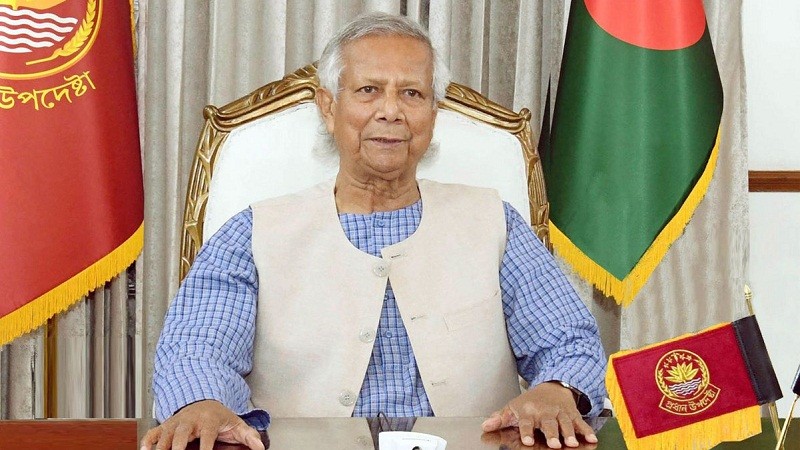
Reports from several influential Indian media outlets have sparked intense new discussions in Bangladesh’s political arena. According to reports published by outlets such as Uttar Banga Sangbad and Ei Samay Online, the name of Nobel laureate economist Muhammad Yunus has emerged as a significant topic of discussion for Bangladesh’s next presidency.
The reports suggest that despite incumbent President Mohammed Shahabuddin’s term lasting until 2028, rumors are circulating in political circles that he may express a desire to resign. It is against this backdrop that Indian media outlets have highlighted Yunus’s name as a potential next occupant of Bangabhaban (the presidential palace).
Indian analyses reveal that the Bangladesh Nationalist Party (BNP), which returned to power with an absolute majority in the recently concluded elections, now faces a new political reality. Following the swearing-in of acting chairman Tarique Rahman as Prime Minister, speculation has begun not only regarding government formation but also the presidential post. The reports further suggest that Yunus’s international acceptability and his strong ties with the Western world could be a significant diplomatic asset for the new government.
Indian media outlets claim that discussions are ongoing in diplomatic and political circles regarding Yunus’s future role after concluding his tenure as Chief Advisor of the interim government. Analysts have particularly opined that if Yunus becomes president in the context of potentially increased presidential powers following the approval of the ‘July Charter,’ the role would not merely be ceremonial but would carry significant policy and strategic importance. Simultaneously, questions have arisen as to whether this would create another powerful center of authority alongside the head of government.
However, Indian media outlets have reported that Yunus is not the only name in contention for the presidency; several veteran BNP leaders are also being discussed. Names like Khandaker Mosharraf Hossain, Mirza Fakhrul Islam Alamgir, and Nazrul Islam Khan are frequently appearing on the list of potential candidates. The reports also highlight the view that appointing a party loyalist as president would ensure stronger control over government policy-making.
Meanwhile, BNP’s international affairs advisors, in statements to Indian media outlet NDTV, have clarified that no final discussions have yet taken place regarding appointing any specific individual to a constitutional post. The message conveyed is that Tarique Rahman believes in an inclusive governance system and is keen to seek advice from skilled and experienced individuals for the country’s benefit.
Amidst this speculation, British journalist and analyst David Bergman commented on social media that the most effective arrangement for Bangladesh could be a combination of a Prime Minister focused on domestic affairs and an internationally renowned President. His comment has received particular attention in the Indian media.
However, counter to all speculation, Yunus’s camp has directly dismissed this possibility. His press secretary stated that Yunus is not interested in politics or any constitutional post. Instead, he wishes to work on his ‘Three Zeros’ global philosophy: zero poverty, zero unemployment, and zero net carbon emissions.
Overall, analyses from Indian media outlets make it clear that whether Muhammad Yunus will become president is still uncertain. However, it cannot be denied that his name has emerged as a central point of discussion surrounding Bangabhaban amidst the realities of a power transition, constitutional changes, and international diplomacy.

