
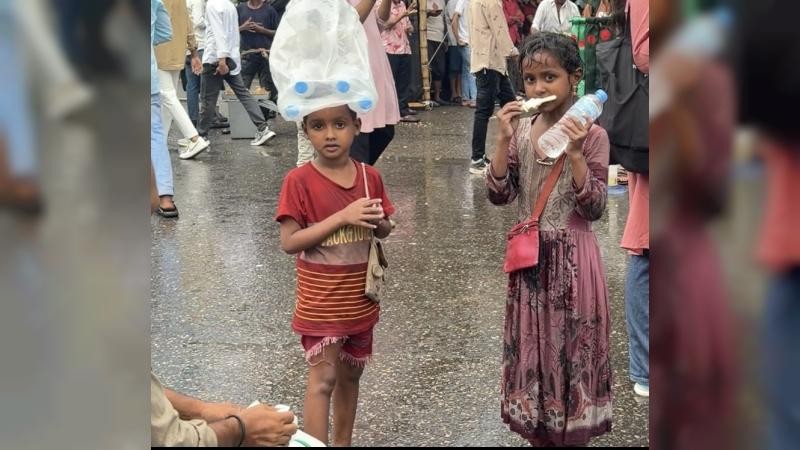
Daybreak had not yet fully unfolded. Traffic on the city streets was beginning to pick up. Amidst this, several children emerged from the footpaths. Some held flowers, some sold water bottles, while others, with sacks on their shoulders, set out to collect discarded paper and plastic. For other children, the day might be about school, play, and joyful times with friends. But for these children, the day begins with the quest for livelihood.
Every day, countless children can be seen on the city’s busy streets. Some sell flowers, some collect old paper and plastic, while others sell small items to passersby. Amidst the hustle and bustle of the busy city, their lives unfold like a silent story.
We commonly know them as ‘street children’. But hidden beneath this identity are their own dreams, struggles, hopes, and various aspirations for the future.
Childhood is meant to be a time for education, play, family, and joy. But poverty and family crises push many children away from a normal childhood. To meet their families’ financial needs, they have to start working at a young age.
The meager income they earn at the end of the day is often used to cover their families’ food and daily expenses. Consequently, even if they wish to go to school, it becomes difficult for them to continue their studies regularly.
Education can transform a child’s future. But for many street children, school remains a distant dream. Some have never had the opportunity to go to school, while others were forced to drop out after studying for a short period due to family problems.
Seeing school-going children with books and school bags, many street children also develop an interest in education. They too wish to hold books in their hands. But the harsh realities of life often put work tools in their hands instead of books.
Nevertheless, given the chance, they too want to study. Many of them dream of—one day getting a good job, supporting their families, and building a safe and beautiful life.
Listening to the dreams of children growing up on the streets reveals that their desires may be simple, but their significance is profound. Some want to be teachers, some police officers, and others dream of becoming doctors. For some, the biggest dream is to have their own home where they can sleep safely at night.
For a child, a ‘good future’ doesn’t necessarily mean a luxurious life. Regular meals, the opportunity to go to school, and the assurance of safe living with family might constitute a beautiful future for them.
The lives of children who spend long hours on the streets are fraught with various risks. Busy roads, unsafe environments, illness, and adverse weather—they have to cope with all these daily.
Where they will find shelter when it rains, how they will get treatment if they fall ill, or where they will sleep safely at night—the answers to these questions often remain uncertain in their lives.
Where security should be a fundamental right for every child, many street children are growing up amidst constant uncertainty.
Individuals and various social organizations often provide street children with food, clothing, and financial assistance. Such aid is important for meeting immediate needs. However, to permanently change their lives, more effective and long-term initiatives are required.
Access to education, safe shelter, healthcare, nutritious food, family income opportunities, and child protection—all these aspects need to be considered together.
Providing a child with food for one day is as important as giving them an opportunity through which they can build their own life in the future and not have to rely on the streets for their livelihood.
We often see street children merely as helpless or unfortunate. But they also possess talent, creativity, aspirations, and dreams. Their lives should be seen not just as stories of hardship, but as stories of potential.
In this regard, the media can play a crucial role. Besides highlighting their plight, their dreams, talents, struggles, and achievements should also be brought to the forefront. This can foster a more positive and humane perspective towards them in society.
Every day, amidst the crowds of thousands on the city’s busy streets, the stories of these children get lost. Some pass them by, some look for a few moments, and some extend a helping hand. But very few people try to understand the story behind their daily struggles.
The child who is selling flowers on the street today does not necessarily have to stay on the street forever. With the right opportunities, education, security, and support, that child can one day transform their own life.
Street children need more than just sympathy; they need education, security, rights, dignity, and opportunity.
The street may be their address today, but may the street never be their future.
Shakila Barsha, English Department, Uttara University.

